DoorDash's $131.5 Million NYC Settlement: What It Means for New Jersey Delivery Drivers
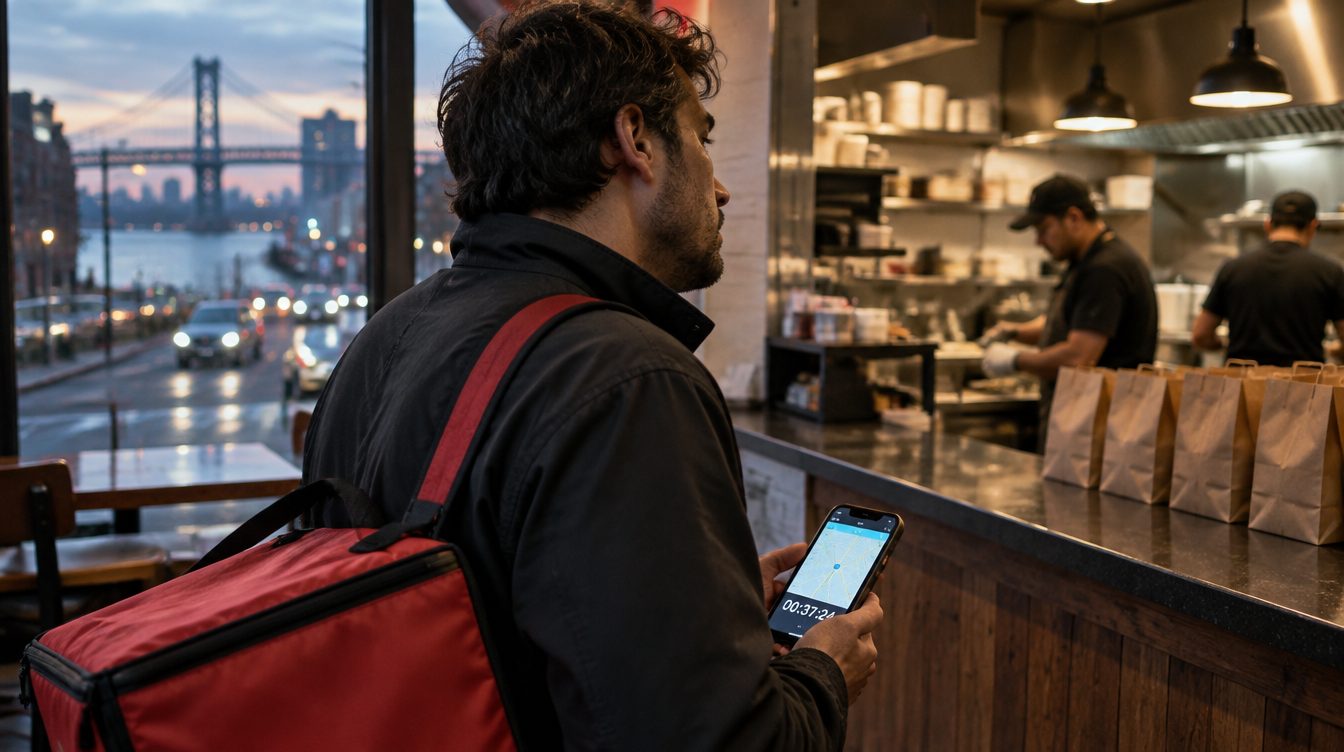
On September 22, 2026, New York City announced that DoorDash will pay at least $131.5 million to settle findings that it underpaid, or paid late, more than 260,000 delivery workers. The city called it the largest labor enforcement action in its history. DoorDash's own statement put it bluntly: "Simply put, we screwed up."
If you delivered in New York City, you may be getting an email about your share right now. If you also delivered in New Jersey, there is a second half to this story that the email will not tell you. The New York settlement pays for New York City work. It does not address the time you worked in New Jersey, and it does not waive your rights under New Jersey law.
Key facts: the DoorDash NYC settlement
Based on New York City's announcements, its DoorDash settlement page, and reporting by amNY:
- Total: at least $131.5 million, with more than $115 million going directly to workers
- Who: more than 260,000 delivery workers who did DoorDash deliveries in New York City
- Period: underpayments from April 2022 through June 2026, and DoorDash must also calculate what it owes for work after that through late November 2026
- The biggest piece: DoorDash says more than $83 million comes from a dispute over paying workers for "on-call" time, the time spent logged in to the app between deliveries
- Other problems the city found: pay that never arrived, pay that arrived late, and time on canceled trips and trips crossing city limits that was left out of the pay calculation
- How workers get paid: no claim form. The city says workers will receive an email in late October, at the address they last used with DoorDash, stating their amount. Questions go to nyc.gov/doordash.
- Going forward: DoorDash must change how it records and pays NYC work, give workers more detail about their pay, and report compliance data to the city for three years
DoorDash disputes the city's position on on-call pay, but agreed to use the city's method going forward. A settlement is not a verdict. But in our opinion, a company does not agree to pay $83 million over waiting time unless that waiting time is worth real money.
Why New York could do this: a minimum pay law for delivery work
New York City has a minimum pay rate for app delivery workers, about $22 an hour according to the city, and the city's rules count on-call time between deliveries in deciding whether workers were paid enough. The city's case was, at its core, about time: DoorDash left minutes out of its count, so workers were paid for fewer hours than they actually worked.
New Jersey does not have a delivery-specific pay law like New York City's. New Jersey has something that, in our opinion, can be more powerful: an employment law that presumes a worker is an employee unless the company proves otherwise.
The NYC payment does not cover your New Jersey work
Many New Jersey drivers deliver on both sides of the Hudson. A shift can start in Jersey City or Fort Lee and end in Manhattan. The city's settlement is built on New York City's law and DoorDash's records of New York City work. Deliveries in Newark, Paterson, Hoboken, Edison, or anywhere else in New Jersey are outside it.
Based on the public announcements, workers do not have to file a claim or give anything up to receive the city's payment. In our opinion, accepting money from New York City for your New York City work does not settle or waive a claim under New Jersey law for your New Jersey work. These are different laws, different time periods, and different hours. If any paperwork that comes with a payment asks you to sign a release, read it carefully and talk to a lawyer before you sign.
Waiting at restaurants, shopping for groceries, and other unpaid time
Here is the problem New Jersey drivers know well. Outside New York City, DoorDash pays per offer, not per hour. You accept a delivery for a set amount, and the clock that matters to you, your actual time, is not what the app pays for.
Think about where that time goes:
- Waiting at the restaurant. You arrive on time and the order is not ready. Ten minutes, twenty minutes, sometimes longer. You cannot leave without losing the order.
- Shopping and picking groceries. On grocery and convenience orders, you walk the aisles, find substitutions, wait at the register, and bag the order. That is work.
- Waiting for the next offer. You are logged in, parked where the orders come from, ready to accept. That is exactly the on-call time that made up more than $83 million of the New York settlement.
Under New Jersey's wage rules, an employee must generally be paid for all the time they are required to be at the place of work or on duty (N.J.A.C. 12:56-5.1 and 5.2). Waiting can count as work when the worker is not free to use the time for themselves. In our opinion, a driver stuck at a counter waiting for food, or walking a grocery store filling someone else's order, is working. We explain how waiting time is analyzed in our post on New Jersey's 2026 ABC test.
Your miles are not paid either
The second thing the app does not pay New Jersey drivers for is the car. There is no separate mileage reimbursement in a New Jersey DoorDash offer. Gas, insurance, maintenance, tires, and depreciation all come out of the driver's pocket.
The IRS standard mileage rate, which estimates the cost of operating a vehicle, is 76 cents per mile for business miles driven on or after July 1, 2026. Use it as a yardstick and the math gets uncomfortable fast. Say a driver earns $18 in base pay and promotions over an hour and drives 18 miles to get it:
- Pay from the app: $18.00
- 18 miles at $0.76 per mile: $13.68
- Left over: $4.32 for the hour
New Jersey's minimum wage is $15.92 an hour in 2026. In our opinion, when vehicle costs are counted, many New Jersey delivery drivers are earning far less than minimum wage for their real time on the job. If a driver is an employee, the company generally cannot push its business costs onto the worker until pay falls below the legal minimum. We walk through vehicle costs in what New Jersey rideshare and delivery drivers may be owed.
DoorDash and your tips
Tips are the other place drivers have been shortchanged, and DoorDash has a documented history here.
DoorDash counted customer tips toward the "guaranteed" amount it promised drivers. The bigger the tip, the less DoorDash paid out of its own pocket. The customer thought the tip went to the driver. In practice, much of it went to lowering DoorDash's labor cost. DoorDash paid $2.5 million to settle with the District of Columbia in 2020 and $16.75 million to settle with New York's Attorney General in 2025 over that practice.
The fight did not end there. After New York City's minimum pay law took effect, DoorDash and another large delivery app moved the tip prompt so customers saw it only after checkout. According to New York City's consumer and worker protection agency, average tips on those apps fell from $3.66 per order to under a dollar, and the city accused the two companies of costing workers more than $550 million. New York City then passed a law requiring a tip option at checkout. In January 2026, a federal judge refused the companies' request to block that law.
In our opinion, the pattern is the same each time: when the law makes the app pay drivers more, the app looks for a way to let the customer's money cover it. And today, a New Jersey driver looking at one bundled number for an order usually has no way to confirm whether the tip was added on top of fair pay or quietly used to prop it up. We cover how these tip schemes work in do rideshare and delivery apps steal your tips?
How New Jersey drivers can get paid under New Jersey law
New York City had to write a special law for delivery workers. New Jersey drivers may not need one. Three features of New Jersey law matter here:
- The ABC test. Under New Jersey law, a worker who is paid for services is presumed to be an employee. The company must prove all three parts of the ABC test to call the worker an independent contractor. In our opinion, an app whose entire business is delivering orders will have a hard time proving delivery drivers are outside its usual course of business. New Jersey's ABC test regulations, N.J.A.C. 12:11, became operative on October 1, 2026.
- A six-year lookback. New Jersey's wage laws generally let a worker reach back six years from the date a claim is filed. Every month you wait, the oldest month can fall out of that window.
- Up to triple damages. New Jersey's Wage Theft Act allows liquidated damages of up to 200 percent of the wages owed, on top of the wages themselves.
If a New Jersey delivery driver is really an employee, the claims can include unpaid waiting and on-call time, pay below minimum wage after vehicle costs, unreimbursed mileage, and tips that did not reach the driver. Every case depends on its own facts. We break these claims down in New Jersey rideshare wage theft.
What to do if you got the DoorDash email
- Read it and take your New York payment. Based on the city's announcements, it is money for your New York City work, and you do not need a lawyer to receive it.
- Save the email. It is a record of when and how much you delivered in New York, and that can help show the full picture of your work.
- Keep your New Jersey records. Earnings statements, order histories, and screenshots of pay breakdowns all help. You do not need to have them organized before you call us.
- Do not assume New Jersey is covered. It is not part of the city's settlement.
If you worked in New Jersey in the last six years for DoorDash, or for any other delivery or rideshare app, you can sign up with our firm here: take our quick survey to see if you qualify.
Frequently asked questions
How much is the DoorDash NYC settlement?
DoorDash agreed to pay at least $131.5 million to settle New York City's findings that it underpaid or paid late more than 260,000 delivery workers. More than $115 million goes directly to workers, and the rest covers civil penalties, a worker compliance program, and administration. The settlement was announced on September 22, 2026.
What is the DoorDash on-call time dispute?
On-call time is time a delivery worker spends logged in to the app between deliveries. New York City's minimum pay law counts it. DoorDash says more than $83 million of the settlement stems from a disagreement with the city over how on-call time should be paid. DoorDash disputes the city's view but agreed to follow the city's method going forward.
Do I need to file a claim to get paid from the DoorDash NYC settlement?
No. According to the city, eligible workers were identified from DoorDash's records and will receive an email in late October 2026, at the address they last used with DoorDash, stating their amount. Questions can go to nyc.gov/doordash.
Does the DoorDash NYC settlement cover deliveries in New Jersey?
No. The settlement is based on New York City's delivery worker pay law and covers work in New York City. Deliveries in New Jersey are not part of it. A New Jersey driver's claim arises under New Jersey law and has to be brought separately.
Does accepting the DoorDash NYC payment waive my New Jersey rights?
In our opinion, no. The city's payment resolves the city's findings about New York City work. It does not address work performed in New Jersey under New Jersey law. If any paperwork with a payment asks you to sign a release, read it carefully and talk to a lawyer before signing.
Does DoorDash pay New Jersey drivers for time spent waiting at restaurants?
Outside New York City, DoorDash pays per offer rather than per hour, so time spent waiting for an order that is not ready is generally not paid as time worked. In our opinion, if a New Jersey driver is an employee under the ABC test, waiting time when the driver is not free to leave may be compensable work time under New Jersey law.
Does DoorDash reimburse mileage in New Jersey?
There is no separate mileage reimbursement in a New Jersey DoorDash offer. Drivers pay for gas, insurance, maintenance, and wear on their own vehicles. If a driver is an employee, those costs can push real pay below New Jersey's $15.92 minimum wage, which may support a wage claim.
Did DoorDash take drivers' tips?
From roughly 2017 to 2019, DoorDash counted customer tips toward the guaranteed amount it promised drivers, so larger tips reduced what DoorDash itself paid. It settled with the District of Columbia for $2.5 million in 2020 and with New York's Attorney General for $16.75 million in 2025 over that practice.
How far back can a New Jersey delivery driver recover?
New Jersey's wage laws generally allow a lookback of up to six years from the date a claim is filed, and the Wage Theft Act allows liquidated damages of up to 200 percent of the wages owed on top of the wages themselves.
What does it cost to talk to a lawyer about a New Jersey delivery driver claim?
Our firm represents drivers on a full contingency. There is no upfront cost, and we recover a fee only if you do.
The bottom line
New York City's settlement shows that a delivery app's waiting time, missing minutes, and late payments can add up to real money: $131.5 million of it. If you delivered in New York City, watch for your email. If you also delivered in New Jersey, that payment is only part of what you may be owed. Your New Jersey time, your miles, and your tips are a separate question under New Jersey law, and the six-year clock is running. Take our quick survey to see if you qualify.
Drove in New Jersey? Find out what you may be owed.
Free case review for NJ rideshare and delivery drivers. You pay nothing unless we recover for you.
Check if I qualifyAttorney Advertising. Swartz Swidler, LLC. General information, not legal advice. Results may vary depending on your particular facts and legal circumstances.