Lyft's $272.5 Million California Settlement: What It Means for New Jersey Rideshare Drivers
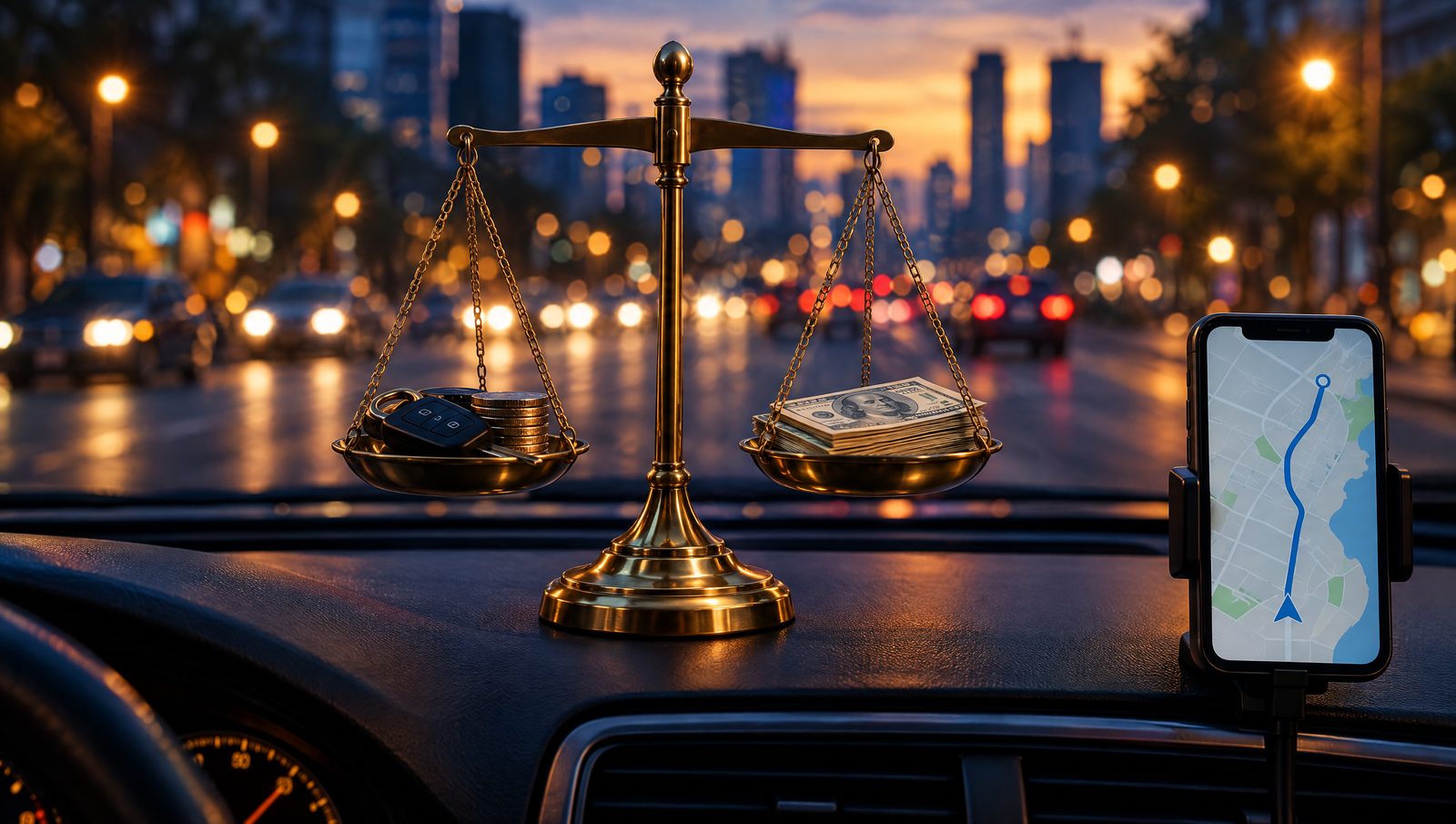
On October 1, 2026, California announced that Lyft will pay $272.5 million to settle claims that it misclassified its California drivers as independent contractors. California's Attorney General called it the largest misclassification settlement in the state's history.
That is the headline. For New Jersey drivers, the more important part of the story is where California's claims stop, and why New Jersey's do not.
California's settlement covers driving from April 2016 through December 15, 2020. It ends there because California changed the law for app-based drivers. New Jersey never did. In our opinion, that difference, combined with New Jersey's six-year lookback and the possibility of up to triple damages, puts New Jersey rideshare drivers in a stronger position than many of them realize.
What Lyft agreed to pay in California
The key terms, according to the announcements by California's Labor Commissioner and Attorney General:
- $272.5 million total, plus any accrued interest
- About $237 million, or 87 percent, reserved for drivers
- Payments based on the hours and miles drivers logged from April 2016 through December 15, 2020
- Claims that drivers were denied minimum wage, overtime, rest-break premiums, reimbursement of business expenses, accurate wage statements, timely pay, and paid sick leave
- More than 1,600 drivers who filed individual wage claims will receive additional money, including the Labor Commissioner's own $5.45 million share of penalties, which the State redirected to those drivers
- The settlement still needs court approval, and Lyft has told investors it may pay over four years
Lyft did not admit liability. In its filing with the Securities and Exchange Commission, the company stated that the settlement is not an admission of fact or liability. That is standard, and a settlement is not a verdict. But in our opinion, a company does not agree to pay more than a quarter of a billion dollars to make a weak claim go away.
Why California's claims stop in December 2020
California adopted the ABC test for wage claims through its Supreme Court's 2018 Dynamex decision, then wrote it into statute with AB 5, effective in 2020. The ABC test presumes a worker is an employee and puts the burden on the company to prove otherwise. In 2020, the Labor Commissioner, the Attorney General, and the city attorneys of San Francisco, Los Angeles, and San Diego sued. According to the Attorney General's office, the State and its partners won every legal challenge in court along the way.
The rideshare and delivery companies took a different route. They spent heavily to pass Proposition 22, a November 2020 ballot measure that created a separate classification framework for app-based drivers. Prop 22 took effect on December 16, 2020, and California's Supreme Court upheld it in 2024.
That is why the settlement window closes on December 15, 2020, the day before Prop 22 took effect. The settlement does not require Lyft to reclassify California drivers, and it provides no relief for work after that date.
The lesson, in our view, is simple. While the ABC test applied to California drivers, the argument that they were employees held up in court. What stopped the clock was not a court ruling. It was a change in the law.
New Jersey never passed a Prop 22
New Jersey has applied the ABC test to wage claims for years. In 2015, the New Jersey Supreme Court held in Hargrove v. Sleepy's that the ABC test governs claims under the state's Wage Payment Law and Wage and Hour Law. Under that test, a worker who performs services for pay is presumed to be an employee. The company must prove all three prongs, A, B, and C, and failing any one of them means the worker is an employee.
On October 1, 2026, the same day California announced the Lyft settlement, New Jersey's ABC test regulations, N.J.A.C. 12:11, became operative. The Department of Labor did not invent a new test. It wrote down the one that already applied, and its rulemaking record applied Prong B reasoning directly to rideshare work. We walk through that history in our post on New Jersey's 2026 ABC test.
What New Jersey has not done is carve rideshare drivers out. There is no New Jersey version of Prop 22. Business groups have said they would like the Legislature to change the rules, but as of this writing, no New Jersey law removes rideshare drivers from the ABC test. A New Jersey rideshare driver is presumed to be an employee unless the company can prove otherwise.
New Jersey has already collected from Lyft once
This is not theoretical in New Jersey. In September 2025, the New Jersey Department of Labor announced that Lyft paid $19.4 million after a state audit found it had misclassified more than 100,000 drivers as independent contractors. The audit started when Lyft drivers applied for unemployment and disability benefits and the State discovered Lyft had not paid into those funds on their behalf.
Lyft contested the assessment starting in 2022. Then, days before its first hearing date, it withdrew its challenge and paid the balance, including $8.5 million in penalties and interest.
One detail about that payment matters for drivers. The money went into New Jersey's unemployment, disability, family leave, and workforce funds. It did not go to drivers. A state audit recovers what the State is owed. A driver's own wage claim is how a driver recovers what the driver is owed.
Six years back, and New Jersey's window is still open
Here is where the California comparison becomes concrete.
California's covered period runs about four years and eight months, and then it ends for good. New Jersey's wage laws, since the 2019 Wage Theft Act, generally let a worker reach back six years from the date a claim is filed. And because New Jersey never passed a Prop 22, there is no cutoff date on the other end.
Put the two side by side. California's recovery stops in December 2020. A New Jersey driver who files in October 2026 may be able to reach back to roughly October 2020. In other words, a New Jersey driver's lookback, measured from today, starts about where California's ends, and it runs right up to the present.
The six-year window also moves. Every month a driver waits, the oldest month in the window can fall outside it. Waiting does not make a claim bigger. It can make it smaller.
Up to triple damages under New Jersey's Wage Theft Act
The second difference is the remedy. New Jersey's Wage Theft Act allows liquidated damages of up to 200 percent of the wages owed, on top of the wages themselves. That means a recovery that can reach up to three times what a driver is owed.
The math is simple. If a driver were owed $10,000 in unpaid wages, the law allows for liquidated damages of up to $20,000 more, for a potential total of up to $30,000. That is an illustration of how the statute works, not a prediction for any driver. The law gives companies limited defenses, and every case depends on its facts.
What the California settlement may signal for New Jersey drivers
We want to be careful here. The California settlement covers California drivers only. It does not resolve any claim for a New Jersey driver, and it does not set a price for one. California's laws, damages, and procedures are different from New Jersey's.
But in our opinion, the settlement tells New Jersey drivers three useful things:
- The claims are the same kind of claims. Minimum wage, unreimbursed vehicle costs, sick leave, and accurate pay records sit at the center of New Jersey misclassification claims too.
- The ABC test held up. While California applied the ABC test to drivers, the State's position that they were employees survived in court, and the case ended in the largest misclassification settlement in California history.
- New Jersey has no cutoff. New Jersey drivers bring their claims under the same kind of test, with no Prop 22 end date, a six-year lookback, and the possibility of up to triple damages.
Put together, we believe many New Jersey rideshare drivers may be positioned for significant recoveries. Every driver's claim depends on that driver's own facts.
What a New Jersey rideshare driver should do now
California drivers had to wait for the State to finish a case that started in 2020. New Jersey drivers do not have to wait for anyone. A driver's own claim starts moving when it is filed, and the six-year window keeps moving whether or not a claim is filed.
You do not need to have your records organized before you start. Many drivers come to us with nothing more than the app on their phone and a rough sense of how long they drove. Gathering the proof is our job.
If you drove for Lyft or another rideshare or delivery app in New Jersey, find out whether you have a claim. Our guides to New Jersey rideshare wage theft and what New Jersey rideshare drivers may be owed explain more, or you can start at gigdriver.lawyer.
Frequently asked questions
How much is the Lyft California settlement?
Lyft agreed to pay $272.5 million, plus any accrued interest, to resolve claims brought by California's Labor Commissioner, its Attorney General, the city attorneys of San Francisco, Los Angeles, and San Diego, and private plaintiffs. About $237 million is reserved for drivers. The settlement was announced on October 1, 2026, and is subject to court approval.
Does the Lyft California settlement cover New Jersey drivers?
No. It covers driving in California from April 2016 through December 15, 2020. New Jersey drivers are not part of it. A New Jersey driver's claim arises under New Jersey law and has to be brought separately.
Why does the California settlement end on December 15, 2020?
Proposition 22, a California ballot measure that created a separate classification framework for app-based drivers, took effect on December 16, 2020. The settlement covers the period before that change.
Does New Jersey have a law like Prop 22?
No. As of this writing, New Jersey has not carved rideshare drivers out of its ABC test. Under New Jersey law, a worker who performs services for pay is presumed to be an employee, and the company must prove all three prongs of the ABC test to show otherwise. New Jersey's ABC test regulations, N.J.A.C. 12:11, became operative on October 1, 2026.
How far back can a New Jersey rideshare driver recover?
New Jersey's wage laws generally allow a lookback of up to six years from the date a claim is filed. The window moves forward with time, so the oldest months can fall outside it as time passes.
What are triple damages under New Jersey law?
New Jersey's Wage Theft Act allows liquidated damages of up to 200 percent of the wages owed, in addition to the wages themselves. That can bring a recovery to up to three times the amount owed, depending on the facts and any defenses the company raises.
Has Lyft paid New Jersey before over driver classification?
Yes. In September 2025, the New Jersey Department of Labor announced that Lyft paid $19.4 million after an audit found it had misclassified more than 100,000 drivers from 2014 to 2017. Lyft said it disagreed with the findings but would not pursue further challenges.
But that payment only resolved the State's unemployment insurance and related benefit-fund assessment. The money went to state funds, not to drivers, and it in no way waived any driver's claim for unpaid wages.
Drove in New Jersey? Find out what you may be owed.
Free case review for NJ rideshare and delivery drivers. You pay nothing unless we recover for you.
Check if I qualifyAttorney Advertising. Swartz Swidler, LLC. General information, not legal advice. Results may vary depending on your particular facts and legal circumstances.